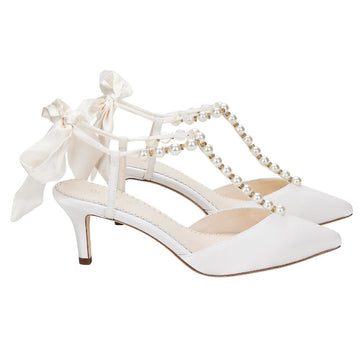
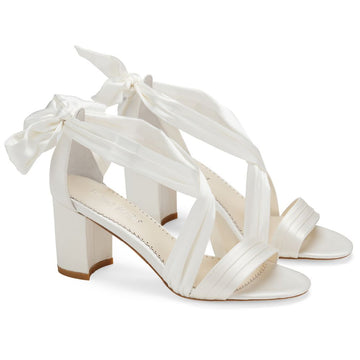
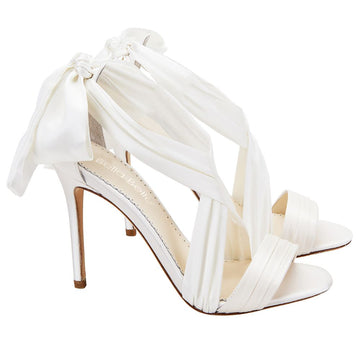
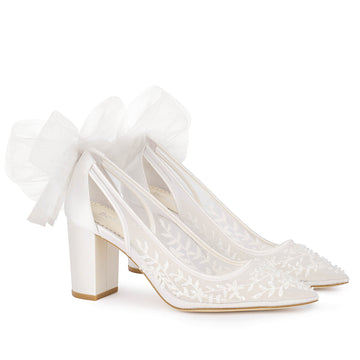
Shop Bow Wedding Shoes by Bella Belle

    Filter

      Why Choose Bow Wedding Shoes by Bella Belle

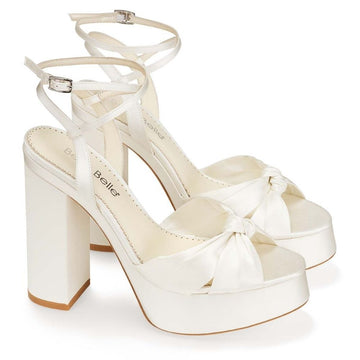
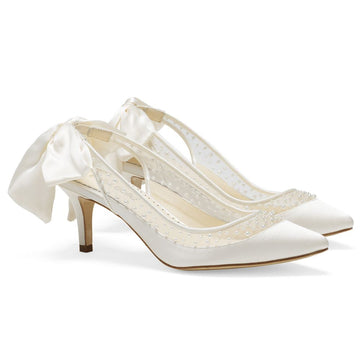
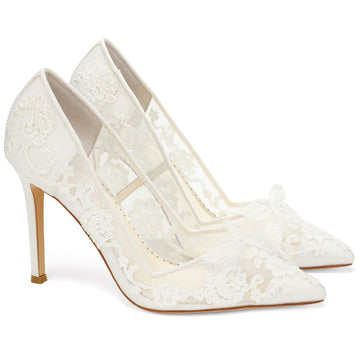
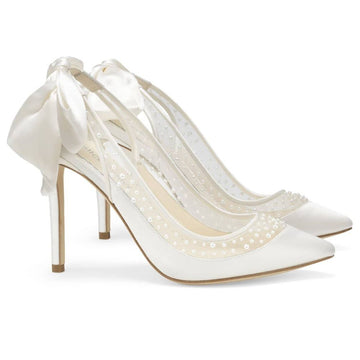
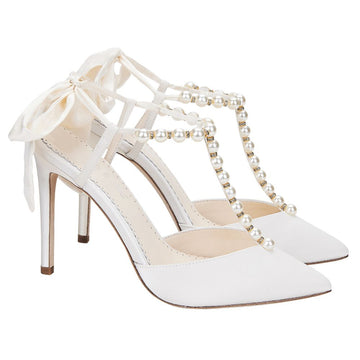
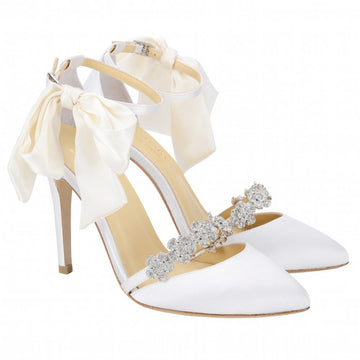
      Even though trendy, bow bridal shoes never go out of style. Bow wedding shoes add a touch of innocence, youth, and grace to a bridal outfit. They're a great way to zhuzh up a more classic look, but we love the idea of pairing bow wedding shoes with a bow wedding dress for an impactful fashion moment. Polish this style by choosing bow shoes with detailing that matches the trim, embroidery, or fabric of your gown or bridal outfit.


      Unsure if bow wedding shoes are right for you? Our Ultimate Shoe Guide features styling tips and tricks to help you find your perfect fit.  For more personalized suggestions, try our Bridal Style Quiz.  

      Frequently Asked Questions

      The bow has always existed in bridal fashion, but somewhere between the quiet luxury movement and the coquette aesthetic taking over Pinterest and TikTok, it stopped being a subtle accent and became the detail brides are actively searching for. Here’s why.

      The Bow As A Luxury Signal

      In fashion, the bow has long signaled intentionality. When Valentino put oversized ribbons on couture gowns, and Simone Rocha made them a signature statement, the bow became shorthand for considered femininity at a luxury level. Bridal design followed. Modern brides who shop the way they normally dress, with reference to what is happening on the runway and in editorial, began seeking out wedding shoes with bows to bring that same energy to their big day.

      Why Ivory Makes The Bow The Hero

      Color does a lot of heavy lifting in bridal styling, and lighter shades give the bow maximum visibility. On a white or ivory heel, the bow's fabric reads in full contrast against the gown without competing with it. In contrast, a colorful bow against an equally colorful dress requires careful balancing. An ivory bow against a white dress creates a tonal harmony in which the ribbon’s texture and shape become the point of interest, rather than the color contrast. Essentially, the construction does all the work.

      The Social Media Movement Behind The Trend

      The flat lay has become one of the most circulated bridal content formats online, and a bow heel is one of the most photographable bridal shoe details. The silhouette, the dimension, the way soft tulle or structured silk bows catch overhead light all read perfectly in still photography and in videos alike. Brides who plan their wedding with a visual aesthetic in mind have quickly found out that a bow heel delivers the kind of distinctive, editorial detail that elevates every Instagrammable moment of their day.

      From Trend To Timeless

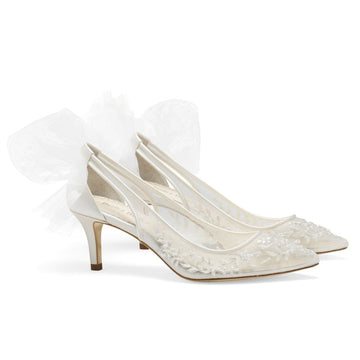
      What makes the current bow shoes moment different from previous trend cycles is that the bow is not arriving as a novelty. It has always been a part of bridal design. What has changed is its prominence, from a tucked detail at the heel to an architectural focal point at the vamp, the ankle, or the back of the shoe. Styles like the Easton, with its ethereal removable tulle bows and delicate hand-beaded floral embroidery, show exactly how a bow can be both current and enduring without being tied to a single season or trend.

      The category of bow shoes is broader than most brides initially realize. The bow, as a design element, appears in distinct constructions, each with its own mood, visual weight, and styling application.

      Tulle Bows: Soft, Voluminous, And Romantic

      A tulle bow is the most dramatic interpretation of the detail. The sheer, airy fabric creates volume without weight, catching light and movement in a way denser materials cannot. Tulle bows tend to sit at the ankle or at the back of the heel, where they have space to billow and move with every step. They are at their best in ceremony settings where the bride is walking toward the altar. Each stride creates a soft flutter that photographs extraordinarily well. The Edna, a 4-inch ivory lace heel with removable tulle bows and optional ankle straps over soft illusion mesh for a comfortable fit, demonstrates how tulle and lace work in concert to create a look that is simultaneously delicate and structured.

      Silk Ribbon Bows: Clean Lines And Quiet Luxury

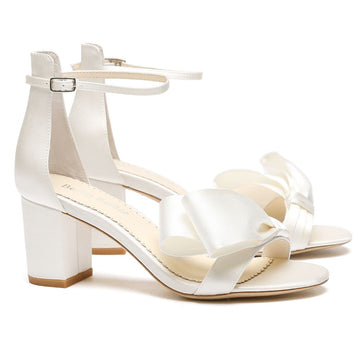
      A silk ribbon bow is more minimal and more architectural than its tulle counterpart. The material holds its shape, creating precise folds and pointed bow tails that read as intentional and refined. Silk bows tend to photograph gorgeously and work well against sleek, minimal gowns where the bride wants a single point of focus rather than layered embellishment. The Zoya, with its oversized asymmetrical silk bow set off-center and a 2.5-inch ivory block heel, is the definitive expression of this aesthetic. This pair of ivory wedding shoes is structured and utterly timeless.

      Lace Bows: Texture, Tradition, And Fashion Together

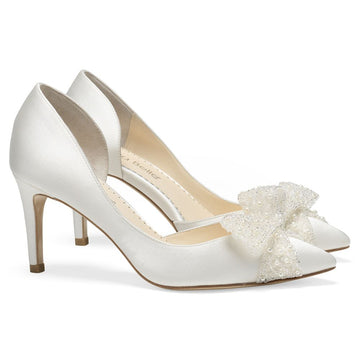
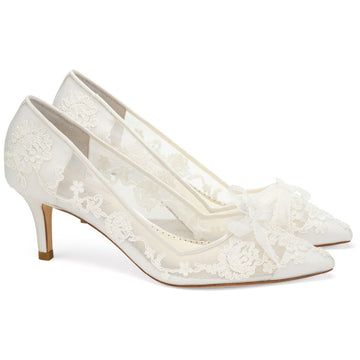
      A lace bow brings an additional layer of surface texture to the bow detail that silk and tulle cannot offer. Alencon lace, floral lace, and embroidered mesh bows have a tactile richness that rewards close inspection and performs beautifully in the kind of detail shots a wedding photographer dedicates to footwear. The Felicity, a low, 2-inch slingback kitten heel with an oversized Alencon lace bow at the toe box, captures exactly this quality: a playful, enchanting pair of lace wedding shoes where the ribbon becomes the defining element of the entire silhouette.

      A wedding shoe is captured in more photographic contexts than most brides anticipate. Understanding how bow heels perform on camera helps brides make a fully informed choice. Ivory styles, in particular, interact with light in ways that make them consistently among the most striking choices in bridal photography.

      The Flat Lay: Where The Bow Takes Center Stage

      The pre-ceremony flat lay is the one moment the shoe is the subject entirely, styled alongside the gown, rings, flowers, and stationery, with nothing competing for attention. A tulle or silk bow earns its place here in a way a plain heel simply does not. The softness of the fabric against jewelry and paper creates the kind of textural contrast that makes a flat lay feel considered rather than assembled. Ivory bow heels photograph with particular clarity from overhead, with the bow's shape and dimension fully visible and unobscured.

      Walking Shots And The Bow In Motion

      As the bride walks down the aisle or across the reception space, the bow, depending on its placement, creates movement that the camera registers beautifully. An ankle bow catches air with each step, a vamp bow stays front-facing and visible throughout the gait, and a back-of-heel bow creates a trailing softness in motion shots that is uniquely captivating. Photographers who know what they are capturing will take aisle shots to include the bow's movement, which makes briefing them on the specific bow placement of your shoe useful.

      Detail Shots And The Texture Reward

      Wedding photographers working at a high level spend time on close-ups that capture the craftsmanship of your wedding attire and the significance of this monumental moment simultaneously. A bow heel rewards this attention. The folds of a silk bow, the translucency of a tulle layer, or the texture of a lacy bow are all details that can be photographed with extraordinary depth and character. Ivory fabric under a camera's lens captures light from multiple angles, creating a permanent visual record that looks as dazzling on film as it does in person.

      White heels with bow detail work across a wider range of gown styles than most brides initially assume. The key principle is always the same: the visual weight of the bow should be calibrated against the profile of your dress.

      Minimalist And Satin Gowns

      A minimalist gown in silk, crepe, or crisp satin is the most natural home for a statement bow heel. When the dress is doing very little in terms of embellishment, the shoe becomes the point of interest, and a meticulously designed bow heel carries that responsibility well. The asymmetric silk bow of the Zoya against an understated satin sheath is the kind of pairing that reads as entirely intentional on both sides. The dress is confident in its simplicity, and the shoe responds with considered detail.

      Full-Skirted And Ballgown Styles

      A ballgown is largely covered by volume, which means the shoe isn’t the constant focal point, but those small glimpses matter. A bow at the ankle or a tulle bow at the back of the heel creates exactly the kind of fleeting reveal that makes the shoe feel worth wearing even when barely visible. For ballgown brides, the bow becomes a striking detail for compelling photographs, which is why tulle or delicate lace constructions that reward close attention work particularly well with this silhouette.

      Tea-Length And Shorter Dresses

      A tea-length or mini wedding dress gives the shoe consistent visibility from the moment the bride enters. Here, the bow is always in frame. This visibility means the bow detail should be chosen to suit the overall register of the look: a lace bow for a romantic vintage aesthetic, a silk bow for a modern feel, or a tulle bow for a playful, feminine mood. Brides in shorter dresses have the most freedom to treat the shoes as co-stars rather than supporting details.

      Lace And Embellished Gowns

      When the gown features significant embellishment, such as a lace appliqué, beaded bodice, or floral embroidery, the bow heel should complement rather than compete. A smaller, more refined bow construction works better here than an oversized statement bow. The Felicity's Alencon lace bow at the toe box, for instance, echoes a lace gown's surface texture while remaining scaled appropriately to your dress's existing detail level.

      Bow placement is the single most underrated design decision a bride makes when shopping for wedding shoes with bow detail. Two shoes can be identical in every other respect and read completely differently based on where the bow sits. Here is what each placement actually does:

      The Vamp Bow: Front-Facing And Visible

      A bow at the vamp, the front upper section of the shoe, is in constant view. Every step forward leads with the bow, which appears in photographs from almost every angle. This placement is particularly effective for brides in shorter or tea-length dresses where the shoe is always visible, and for brides who want their shoe detail to read clearly throughout the day rather than appearing only in certain moments. The Felicity's lace bow at the toe box is the purest expression of this placement. It’s coquettish, demure, and impossible to overlook.

      The Ankle Bow: Security And Playfulness Combined

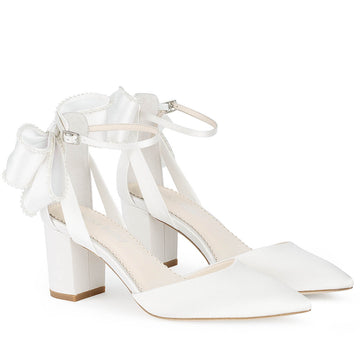
      An ankle bow placement does double duty: it finishes the shoe with a soft, romantic detail while simultaneously providing the visual structure of an ankle closure. The bow sits at the point where the eye naturally travels when looking at a bride's feet, which makes it one of the most photographed placements in bridal footwear. Ankle bows in tulle capture movement and air, imbuing photographs and videos with a dynamic quality.

      The Back-Of-Heel Bow: A Private Detail For Every Step

      A bow placed at the back of the heel is invisible to the wearer and visible to everyone watching the bride walk. This placement creates a sense of discovery; guests and photographers notice it as the bride moves away, a distinctive charm that front-facing details cannot match. It reads as intentionally understated and is well-suited to brides who prefer a cleaner silhouette from the front, with a surprise element from the back.

      Detachable And Removable Bows: Versatility Without Compromise

      Some of our most-loved bow styles feature removable bow constructions that let brides adjust their look between the ceremony and reception. For example, Easton's removable tulle bows can be removed entirely, allowing the focus to shift to its gorgeous hand-beaded floral detailing. Meanwhile, Edna's removable tulle bows and ankle straps offer multiple look configurations from the same shoe. For brides who want ceremony drama and reception ease, or who simply value the ability to adjust their look as the day unfolds, a removable bow construction gives styling freedom.

      The timing of a bridal shoe purchase has real consequences for the fit of the dress, the quality of the break-in period, and the peace of mind leading up to the wedding. Bow heel styles have a few specific considerations worth planning around.

      Buy Before Your First Alteration Fitting

      The most important rule applies to all bridal footwear, whether you are shopping for block heel wedding shoes or a lower profile. Above all else, buy before your first alteration fitting. Heel height determines hem length, and a bow heel is no exception. Whether the bow sits at the vamp, ankle, or heel back, the height beneath it changes the measurement your tailor needs. For removable bow styles like Easton or Edna, decide which configuration you plan to wear for the ceremony before the fitting. A voluminous bow may slightly change the look, and your tailor needs to work from a single, confirmed reference point.

      How Much Lead Time You Actually Need

      In terms of lead time, two to three months between purchase and the wedding is the practical standard. This window covers any sizing exchanges and a full break-in period, ensuring the shoes are ready before your alteration fitting. For removable bow styles, use part of the break-in period wearing each configuration separately. Both options should feel completely comfortable before the day, not just the one you are planning to wear for the ceremony.

      How To Break In Delicate Bow Constructions

      Breaking in bow heels calls for a little more patience than a standard heel. Start on a carpeted surface if possible. Outdoor surfaces cause significantly more wear on tulle, silk, and lace than any finished floor, and delicate bow constructions are worth protecting. Fifteen to twenty minutes per session over two to three weeks is usually enough to soften the sole and mold the strap without stressing the bow's fabric or attachment points. And because comfortable wedding shoes are worn-in shoes, that time spent at home in them is never wasted.

      Caring For Tulle And Silk Bow Fabrics

      Fabric care matters beyond the break-in period, too. Between sessions, never fold or compress your shoes when storing them. This applies equally to dramatic oversized bows and the more tailored black bow heels, where crease lines in the fabric can be just as visible. If possible, store the shoes in their original box with the bow properly supported. Additionally, keep them out of prolonged sunlight, as white and ivory fabrics can shift toward yellow with extended exposure, which is the last thing you want when you finally slip them on. Before wearing, gently shake the tulle bows to restore their volume. They should look as fresh on your wedding day as they did when they arrived.

      Back to top