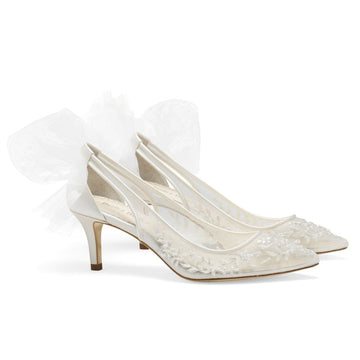
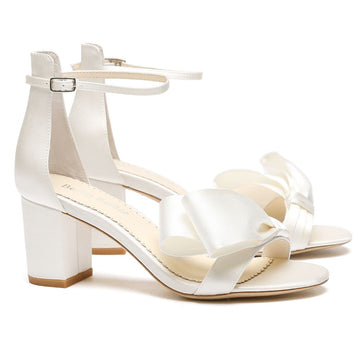
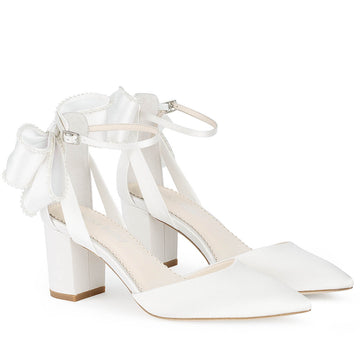
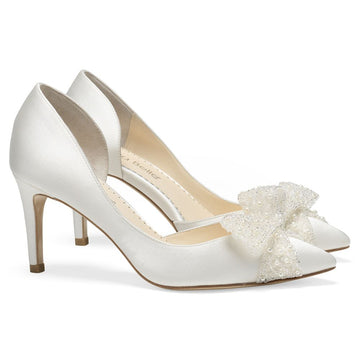
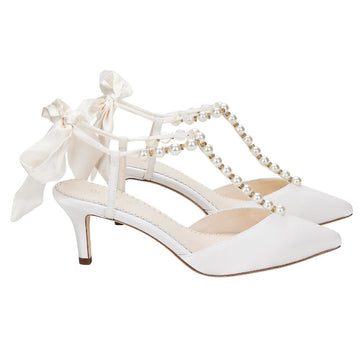
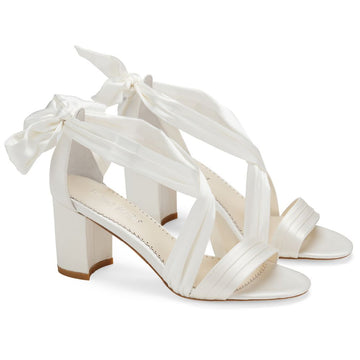
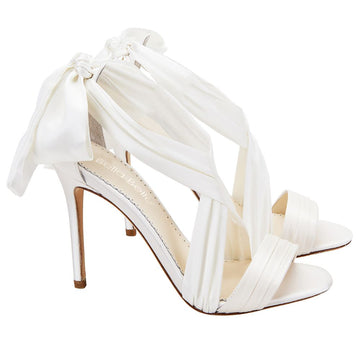
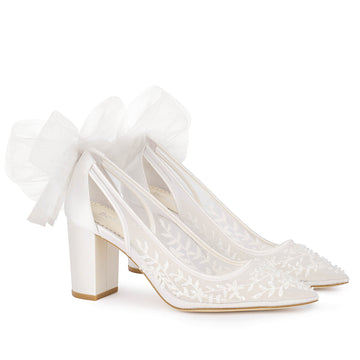
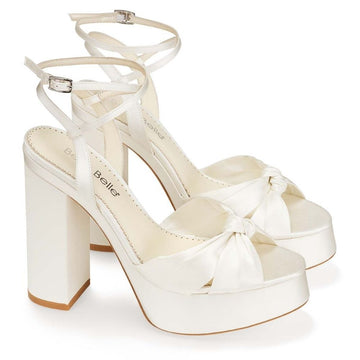
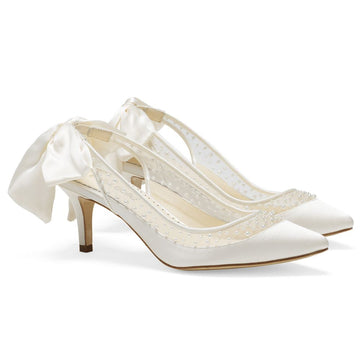
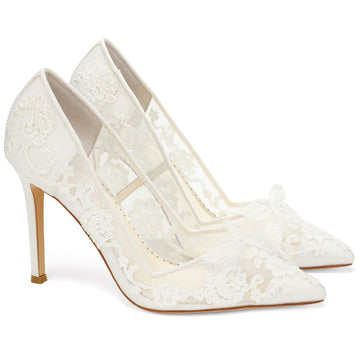
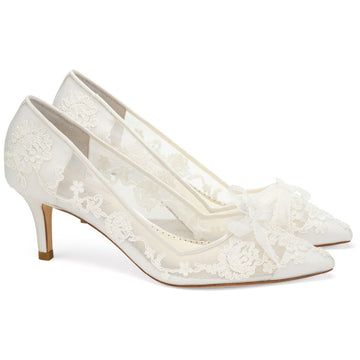
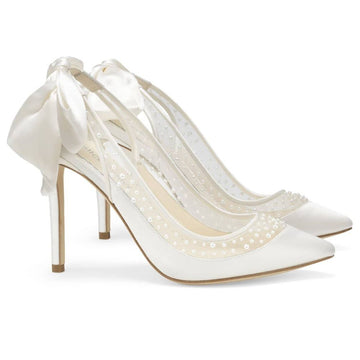
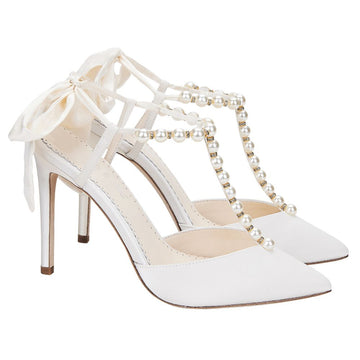
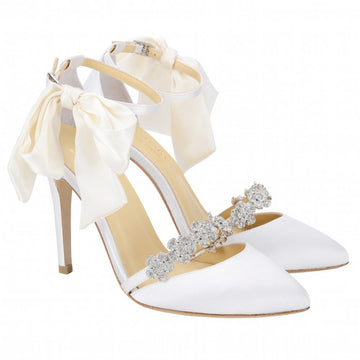
The timing of a bridal shoe purchase has real consequences for the fit of the dress, the quality of the break-in period, and the peace of mind leading up to the wedding. Bow heel styles have a few specific considerations worth planning around.
Buy Before Your First Alteration Fitting
The most important rule applies to all bridal footwear, whether you are shopping for block heel wedding shoes or a lower profile. Above all else, buy before your first alteration fitting. Heel height determines hem length, and a bow heel is no exception. Whether the bow sits at the vamp, ankle, or heel back, the height beneath it changes the measurement your tailor needs. For removable bow styles like Easton or Edna, decide which configuration you plan to wear for the ceremony before the fitting. A voluminous bow may slightly change the look, and your tailor needs to work from a single, confirmed reference point.
How Much Lead Time You Actually Need
In terms of lead time, two to three months between purchase and the wedding is the practical standard. This window covers any sizing exchanges and a full break-in period, ensuring the shoes are ready before your alteration fitting. For removable bow styles, use part of the break-in period wearing each configuration separately. Both options should feel completely comfortable before the day, not just the one you are planning to wear for the ceremony.
How To Break In Delicate Bow Constructions
Breaking in bow heels calls for a little more patience than a standard heel. Start on a carpeted surface if possible. Outdoor surfaces cause significantly more wear on tulle, silk, and lace than any finished floor, and delicate bow constructions are worth protecting. Fifteen to twenty minutes per session over two to three weeks is usually enough to soften the sole and mold the strap without stressing the bow's fabric or attachment points. And because comfortable wedding shoes are worn-in shoes, that time spent at home in them is never wasted.
Caring For Tulle And Silk Bow Fabrics
Fabric care matters beyond the break-in period, too. Between sessions, never fold or compress your shoes when storing them. This applies equally to dramatic oversized bows and the more tailored black bow heels, where crease lines in the fabric can be just as visible. If possible, store the shoes in their original box with the bow properly supported. Additionally, keep them out of prolonged sunlight, as white and ivory fabrics can shift toward yellow with extended exposure, which is the last thing you want when you finally slip them on. Before wearing, gently shake the tulle bows to restore their volume. They should look as fresh on your wedding day as they did when they arrived.